

What is molds in plastic industry?
Mold, is a hollowed-out block that is used to give shape to molten plastic material in the plastic industry .
Mould or mold are the common terms used to describe the tool used to produce plastic parts in moulding.
PLASTIC MOLDS DESIGN
Plastic mold design is the process of creating a mold that defines the shape, size, and surface details of the final plastic product .
PLSTIC MOLDS BASE
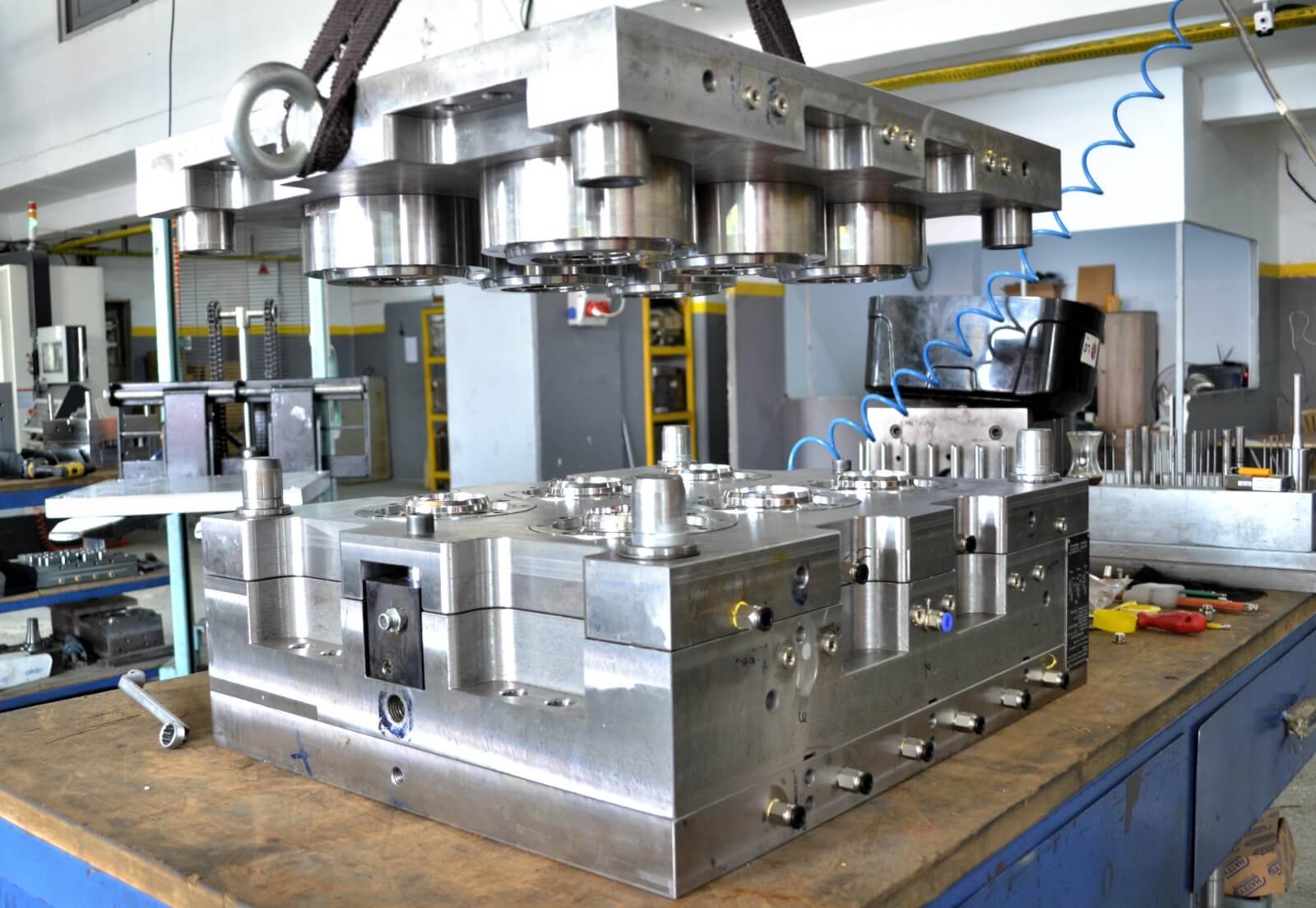
A mold base is the main part of a plastic injection mold, which is assembled from a diversity of steel plates and parts .
It serves as the framework of a complete mold .
The mold base is typically made of metal or another hard material such as H13, 1.2344, NAK 80 or similar steel .

WHAT ARE THE TYPES OF PLASTIC MOLDS?
There are several types of plastic molding techniques used in the plastic industry. Here are some of the most common types of plastic molding techniques:
- Injection molding: This is the most widely used plastic molding technique. In this process, molten plastic is injected into a mold to create a part .
- Blow molding: This technique is used to create hollow plastic parts such as bottles and containers. In this process, a tube of molten plastic is blown into a mold to create the desired shape .
- Extrusion molding: This technique is used to create long, continuous shapes such as pipes and tubing.
The molten plastic is then pushed through a mold to form the desired shape..
- Compression molding: This technique is used to create large, complex parts such as car bumpers and fenders. In this process, a pre-measured amount of plastic is placed in a heated mold and compressed under high pressure to create the desired shape .
5. Rotational molding:This technique is used to create large, hollow parts such as tanks and containers. In this process, a mold is filled with a measured amount of plastic powder, which is then rotated at high speeds to evenly distribute the plastic and create the desired shape
What is Plastic Molding used for?
Plastic molding is a manufacturing process that is used to create a wide range of products for many industries including automotive, medical, aerospace, consumer products, toys, plumbing, packaging, and construction .
Injection molding is the most widely used plastic molding technique, and it is used to produce a variety of parts, from small components to entire body panels of cars .
The specific type of molding technique used depends on the desired shape and features of the part, the material used for the part, the material of the mold, and the properties of the molding machine .
Plastic Mold Cavities
A mold cavity is a hollow space or void within a mold that determines the shape, size, and surface details of the final molded product.
The number of cavities in the mold depends on the number of parts to be produced in one cycle.
In one cycle, a single-cavity mold produces one plastic product, while a multi-cavity mold produces more than one plastic product.
What are the types of metals used in manufacturing plastic molds?
The most commonly used metals for manufacturing plastic molds are tool steel, aluminum, copper, and alloys .
Tool steel is the most popular choice for making molds due to its high durability and resistance to wear and tear .
Aluminum is a good choice for low-volume production runs, while copper is used for high thermal conductivity applications .
The choice of metal depends on the specific requirements of the mold, such as the number of parts to be produced, the complexity of the part, and the type of plastic material being used.
Feeding systems used in manufacturing plastic molds.
In plastic mold making, feeding systems are used for measuring.
The feeding system of the plastic mold is part of the melt passage flowing from the nozzle of the injection molding machine to the cavity.
We have two main types:
- cold runner system
- hot runner system.
The design of the feeding system should follow the principles of ensuring the appearance of products, ensuring product quality, and reducing flow resistance.